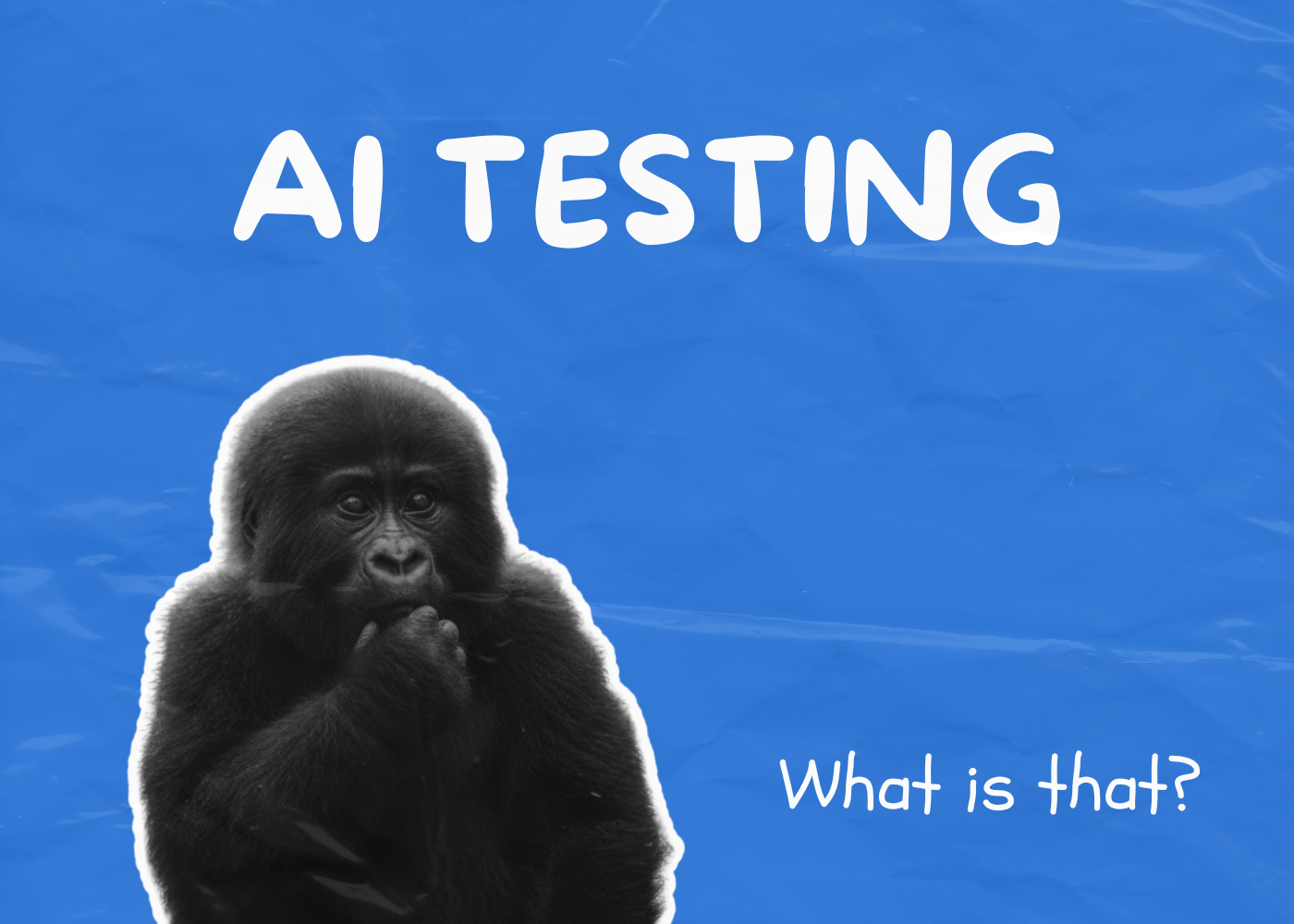
What Is AI Testing - And Why It Matters Now

What Is AI Testing - And Why It Matters Now
By  
Andrea Ignat
 on  
March 24, 2026

Why QA needs an upgrade

Release cycles are faster than ever, yet many teams still test as if every deployment were quarterly. Manual regression, static scripts, and reactive defect fixes slow things down. AI testing introduces an intelligent layer that keeps QA aligned with modern CI/CD speed, learning from each run, adapting to code changes, and predicting risks before they turn into bugs. In simple terms, AI testing blends automation with reasoning. It lets software decide which tests to run, when to run them, and how to maintain itself.

How it works

AI testing systems rely on machine-learning models to analyze patterns from past runs, code commits, and defect history. They can:

  • Generate or suggest new test cases automatically.
  • Heal automation scripts when UI or API elements change.
  • Prioritize which tests to execute based on recent code diffs.
  • Detect anomalies in behavior and performance trends.

Instead of reacting to failures, QA becomes predictive,  focusing effort where failure is most likely.

Benefits for fast-moving teams

When implemented properly, AI testing leads to:

  • Shorter release cycles: automation runs earlier and more often.
  • Lower maintenance costs: self-healing tests reduce manual fixes.
  • Better visibility: dashboards show real-time coverage and pass/fail trends.
  • Improved quality: fewer defects escape into production.

Automation gives speed; AI adds direction. The combination keeps quality and velocity in balance.

Conclusion

AI testing marks a clear turning point in software quality, a shift from repetitive execution to intelligent decision-making. Teams adopting it don’t just move faster; they gain visibility, stability, and confidence throughout their pipeline.

Fast and reliable test automation
AI and forward-deployed QAs. Millions of dollars saved by multiple companies in less than 3 months.
QA DNA gorilla blog illustration
Start your 90 day pilot
Did you like what you read?
Evolve your QA processes with QA DNA today. Otherwise, make sure you share this blog with your peers. Who knows, they might need it.
Copy the link of the article

FAQs

We answer the questions that matter. If something’s missing, reach out and we’ll clear it up fast.

What is AI testing?

AI testing uses artificial intelligence to generate, execute, maintain, or analyze software tests. It ranges from AI-assisted test script generation to fully autonomous agents that plan and run coverage without step-by-step human instruction. The term covers a wide spectrum of capabilities with very different tradeoffs.

How is AI testing different from traditional automated testing?

Traditional automated testing requires engineers to write every test case manually. AI testing generates test cases, identifies coverage gaps, adapts to UI changes automatically, and surfaces failure patterns from run data. The engineer's role shifts from writing tests to directing and reviewing AI output.

Is AI testing reliable enough for production use in 2026?

For well-defined flows with clear success criteria, yes. The important caveat is that AI-generated tests require human review before running as CI release gates. Tests that pass without verifying meaningful behavior give false confidence. Human oversight remains necessary for critical flows.

What types of SaaS teams benefit most from AI testing?

Teams with high release frequency, limited QA resources, or growing regression burdens benefit most. AI testing is particularly valuable when manual regression is slowing release velocity or when an existing test suite is too brittle to maintain efficiently without significant engineering investment.

How does QA DNA apply AI testing?

QA DNA uses agentic AI to accelerate test generation and coverage mapping for SaaS clients. Senior engineers verify every AI output before it runs in CI. The result is faster coverage without sacrificing the reliability that engineering teams need to release with confidence.

Stop shipping bugs to production.

Automate your critical flows in 60 days. Results in your CI from day one.

By clicking Get Started you're confirming that you agree with our Terms and Conditions.